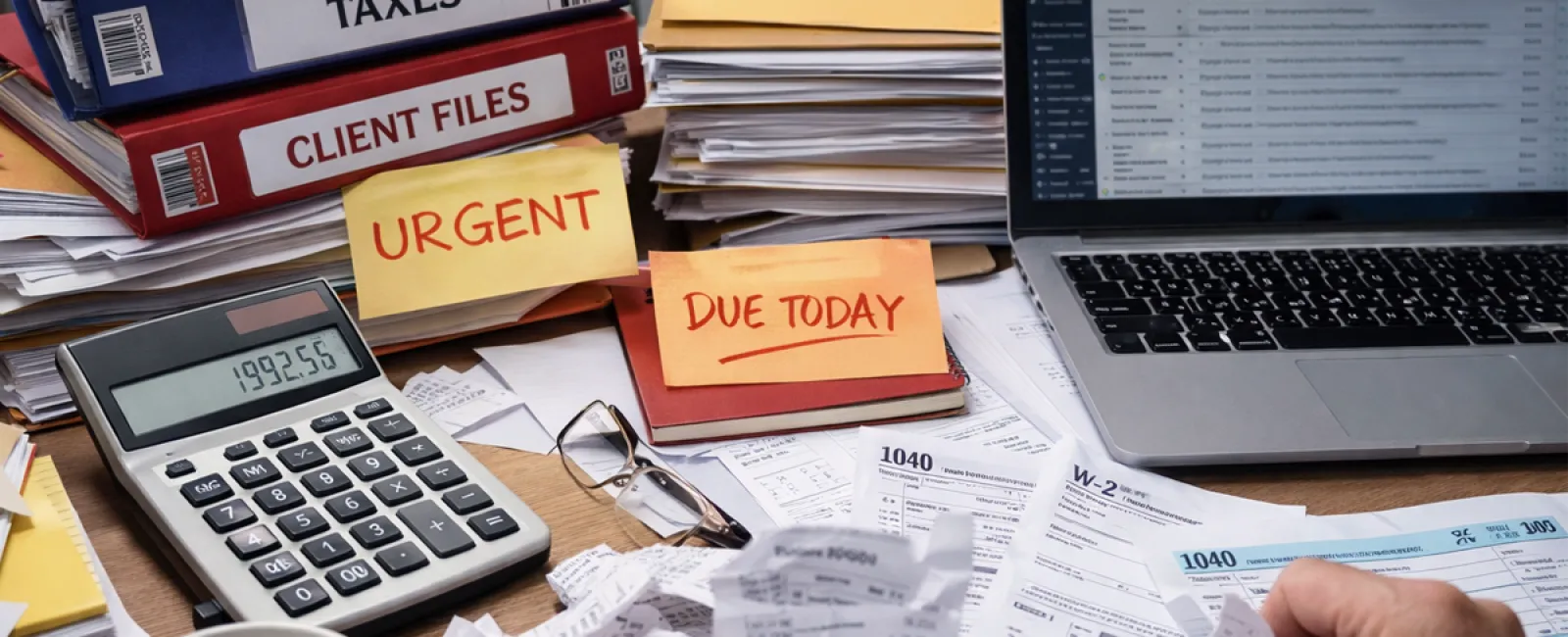
It's March - the crunch time.
Your accountants are overwhelmed, bookkeepers are rushing, deadlines are looming large, and inboxes are flooding nonstop.
Everyone is heads down, just pushing through the busiest month of the year.
This scenario is familiar.
But here's a key fact: hackers know this too.
Cybersecurity experts report a sharp rise in phishing scams during tax season, with March seeing an alarming 28% surge in tax-related fraudulent emails. These scams are subtle, crafted to mimic typical business communications right when everyone's swamped.
This spike isn't random.
It's strategic.
Here is what to expect and four simple strategies to shield your business from becoming an easy target.
The Chaotic Supply Chain
Many overlook this vital point:
Hackers aren't focusing solely on accounting firms.
They exploit the underlying disorder around tax season.
During tax season:
- Clients hurriedly submit confidential documents
- Staff skip routine verifications to manage the workload
- "Just send it" replaces careful checks
- Verification processes are overlooked due to high pressure
The entire environment accelerates.
And rushing invites mistakes.
Hackers target busy, pressured teams—not calm, cautious ones.
March is the peak of this frenzy.
Recognizing These Attacks
This is no fiction.
These scams arrive as emails indistinguishable from your daily business correspondence.
- An email appearing from "your accountant" requests W-2s again citing a supposed issue
- A vendor claims a change in bank details needing immediate update
- A DocuSign request pressures for instant signature on tax documents
- An urgent plea from "your CEO" needing immediate help while traveling
All of these seem ordinary and timely.
That's their power.
Why Even Cautious People Get Fooled
This isn't a matter of carelessness.
It's about human nature under stress.
Under inbox overload and looming deadlines, people skim instead of scrutinize. They assume rather than inquire. They react swiftly.
Scammers count on this.
Their schemes thrive because you're busy—not reckless.
And in March, everyone is racing.
4 Easy Habits to Avoid Becoming a Victim
The great news: you can boost security without complex tools or large teams.
Adopt a few focused habits especially during peak season.
1. Confirm payment updates by calling
If you receive an email about a vendor's new bank details, avoid replying directly.
Instead, call a known contact number to verify.
This simple step stops many costly frauds.
2. Always pause before sending sensitive documents
Urgent demands are a red flag.
Take a moment to validate requests for W-2s, tax files, or financial data.
Genuine senders welcome brief verification delays; scammers won't.
3. Double-check urgent messages through other channels
When an email claims urgency, confirm it by phone, text, or instant message.
A quick two-minute check can stop scams before they start.
Real crises survive verification; fake ones vanish.
4. Alert your team about seasonal scam risks
This week, remind your staff that tax season triggers a spike in scams.
Encourage them to slow down, verify, and speak up if anything feels unusual.
This small culture shift saves hours of cleanup later.
In Summary
Tax time is already stressful—don't add a scam incident to the burden.
These attacks aren't sophisticated; they're timed perfectly.
They depend on rushed decisions.
They exploit assumptions.
They capitalize on March's relentless pace.
To stay safe, you don't need to overhaul systems.
Just slow your pace and verify urgent requests carefully.
That approach covers most threats.
Quick Sanity Check For Your Team
Your company might already have strong safeguards—and if so, excellent!
If tax season turns your team reactive or you're unsure how urgent messages get handled, consider a free Consultation to review.
No gimmicks or pressure, just a straightforward evaluation of small habit adjustments that prevent massive headaches.
If this message doesn't apply to your business, kindly share it with someone who might benefit.
Click here or give us a call at (858) 538-4729 to schedule your free Consultation.